
What to Know About Building a Custom Home
Building a custom home is one of the most rewarding projects you can take on—and one of the easiest to underestimate.
People usually start with inspiration photos and a rough budget. But the builds that go smoothly are the ones where the homeowners understand three things early:
what “custom” really means (and what it doesn’t),
what the full project costs look like (not just the house),
and how long the process actually takes.
This guide covers the big realities that make or break a custom build: scope, cost, timeline, land, builder selection, design priorities, and how to stay organized through the decision-making process.
1. What a "Custom Home" Really Means
A true custom home is designed around you—your lot, your lifestyle, your priorities, and your future plans. You’re not choosing from a menu of upgrades. You’re making decisions that shape the home from the ground up: layout, structure, materials, details, and performance.
To help you decide whether a custom build fits, it’s useful to understand the common categories people lump together:
Custom vs. semi-custom vs. production vs. remodel
Production home: A builder offers a handful of plans in a neighborhood. You select a plan and choose from predefined finish packages or upgrades. This is often the fastest route with the most predictable pricing—but it comes with limited flexibility.
Semi-custom or “partially custom”: You start with an existing plan and can modify it within boundaries. Depending on the builder, you might be able to change room sizes, adjust the kitchen layout, or add features—but you’re still operating within a system.
Custom home: The plan is created for you and coordinated with your lot, setbacks, grading, and utility constraints. You have more control, but you’re also making more decisions, and those decisions affect cost and schedule.
Major remodel / addition: Sometimes the best “custom” outcome is improving an existing home. Remodels can be excellent when the location is right and the structure supports your goals, but they can also be harder to price upfront because hidden conditions aren’t visible until demolition begins.
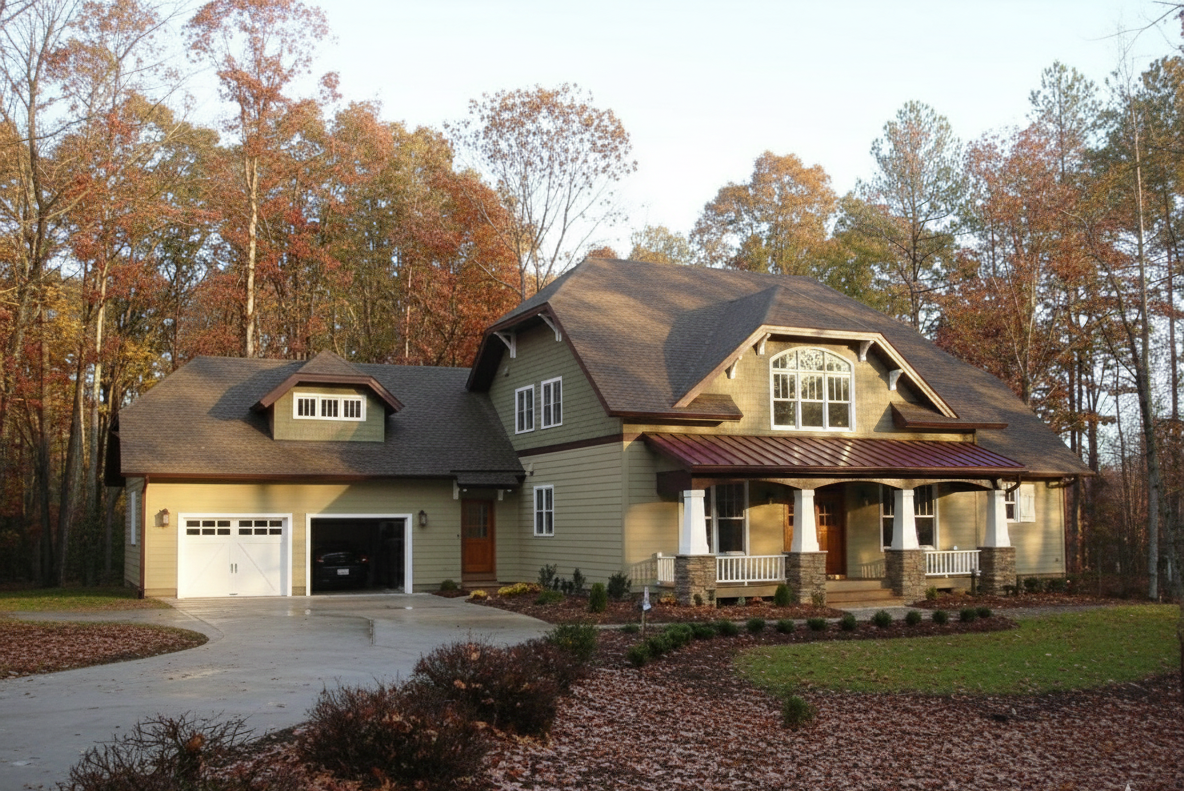
A custom home build is a home designed and constructed based on your needs.
A custom build is often a good fit when:
Can’t find a resale home that fits your needs (layout, location, land, quality).
Have specific requirements (accessibility, aging-in-place, multi-gen living, home office/studio, hobby storage).
Want a long-term “forever” home and are willing to invest the time and energy to get it right.
On the other hand, if your move-in date is tight (6–9 months), or if the budget has very limited flexibility, custom may not be the best route. The process has too many variables—many of them outside anyone’s control—for a perfectly rigid timeline and budget.
2. Cost Expectations: Focus on the Total Project, Not Price Per Square Foot
If you take only one thing from this section, make it this:
The total project cost matters more than cost per square foot.
Price per square foot can be distorted by things that have nothing to do with overall quality. A smaller home with high-end selections can cost more per square foot than a larger home with simpler finishes. A home on a steep lot can cost dramatically more than the same home on a flat lot. Even ceiling heights and window packages can swing pricing significantly.
A more useful way to think about cost is total project cost, broken into categories you can actually plan for.
Here are the major buckets that should be accounted for in a real budget:
Land purchase (if you don’t already own it)
Site work: clearing, grading, driveway, drainage, retaining walls, erosion control
Utilities: well/septic or tie-ins, electric, gas, internet
Design + engineering: architecture, structural engineering, and sometimes civil engineering
Permits, inspections, and any local impact fees
Construction: the house itself (labor, materials, supervision)
Exterior concrete and landscaping: patios, walkways, plantings, irrigation, fencing
Interior items that are often underestimated: appliances, window treatments, closets/shelving, audio/low-voltage
Carrying costs during the build: rent, storage, insurance, and interest/financing costs

3. Timeline Reality: How Long a Custom Home Actually Takes
Most people underestimate timeline because they’re picturing “construction.” But construction is only one phase.
A reasonable ballpark for a typical custom build looks like this:
Design and pre construction usually takes about 2-3 months. This includes designing the house, permits, and financing. This phase quietly eats up more time than people expect.
The construction takes 9-18 months. This involves everything from laying the foundation to putting the last coat of paint on the walls.
The final wrap up takes about a month, which includes inspections, touch ups, etc.
11-21 months is a realistic expectation for many custom projects.
Why timelines stretch
The big repeat offenders:
Major re-designs after plans start: every big change ripples through structure, pricing, permitting
Permits and inspections
Weather: clearing, grading, foundation can all be delayed by poor weather
Backordered materials like windows, specialty tile, custom cabinetry, appliances
Decision delays: if selections aren’t made when needed, trades can’t keep moving
Communication gaps: unclear direction creates rework and lost time
The way to protect the timeline isn’t rushing. It’s clarity: decisions made early, selections planned in the right sequence, and a predictable rhythm of communication so issues are handled before they compound.
4. Land First, House Second: Choosing a Buildable Lot
People shop for land based on location, views, and neighborhood—and those matter. But buildability determines whether the lot is a good investment or a cost trap.
This is why bringing a builder in early is valuable, ideally before you purchase a lot. A builder can evaluate constraints that aren’t obvious during a quick walk-through.
Key items to review include:
Slope and drainage patterns (and what it will take to manage water)
Driveway access and length (which can become a large cost)
Utility access: distance to power, water, sewer, gas, and internet
Septic feasibility if you’re not on sewer (including reserve field requirements)
Setbacks, easements, and buildable area
HOA rules and architectural requirements
Soil or foundation considerations that may require engineered solutions
If these things aren’t checked early, homeowners often end up paying for workarounds: extensive grading, retaining walls, special foundation systems, complex septic designs, or long utility runs. None of those are inherently “bad,” but they need to be understood before you commit to the land.
5. The Builder You Pick Matters More Than the Photos
A custom home is a long relationship. The builder sets the tone for pricing accuracy, schedule control, communication, and ultimately the quality you get behind the walls.
Two homes can look similar in photos and perform very differently over time, depending on build standards, mechanical planning, waterproofing details, framing quality, and how the project is managed.
When you’re evaluating a builder, focus less on the highlight reel and more on proof of process. Some of the strongest indicators of a good custom builder are:
A consistent communication cadence and site meeting structure
Strong references from recent clients with similar projects
Jobsite organization and professionalism when you visit active builds
NextGen Custom Builders bring a combined 60 years of experience, and that matters in the places you don’t see in a portfolio: how clearly the team explains the process, how quickly they spot potential issues, and how they help you weigh trade-offs before they turn into expensive changes. Experience shows up most when the project hits an unexpected snag—because on a long build, something always does.
6. Designing a Home That Fits Your Life (Not Just Your Feed)
Good design isn’t about copying a look. It’s about building a layout that supports the way you actually live.
Before you get deep into aesthetics, start with function. These questions are the ones that prevent regret:
Who lives in the home now, and who might live there in 5–10 years?
Where do you spend time daily—kitchen, living room, outdoor spaces, home office?
Do you host often, and do you host overnight guests?
How do you work, and what needs to be quiet or separated?
What hobbies or routines create clutter (sports gear, tools, crafts, instruments)?
Do you want the home to support aging in place?
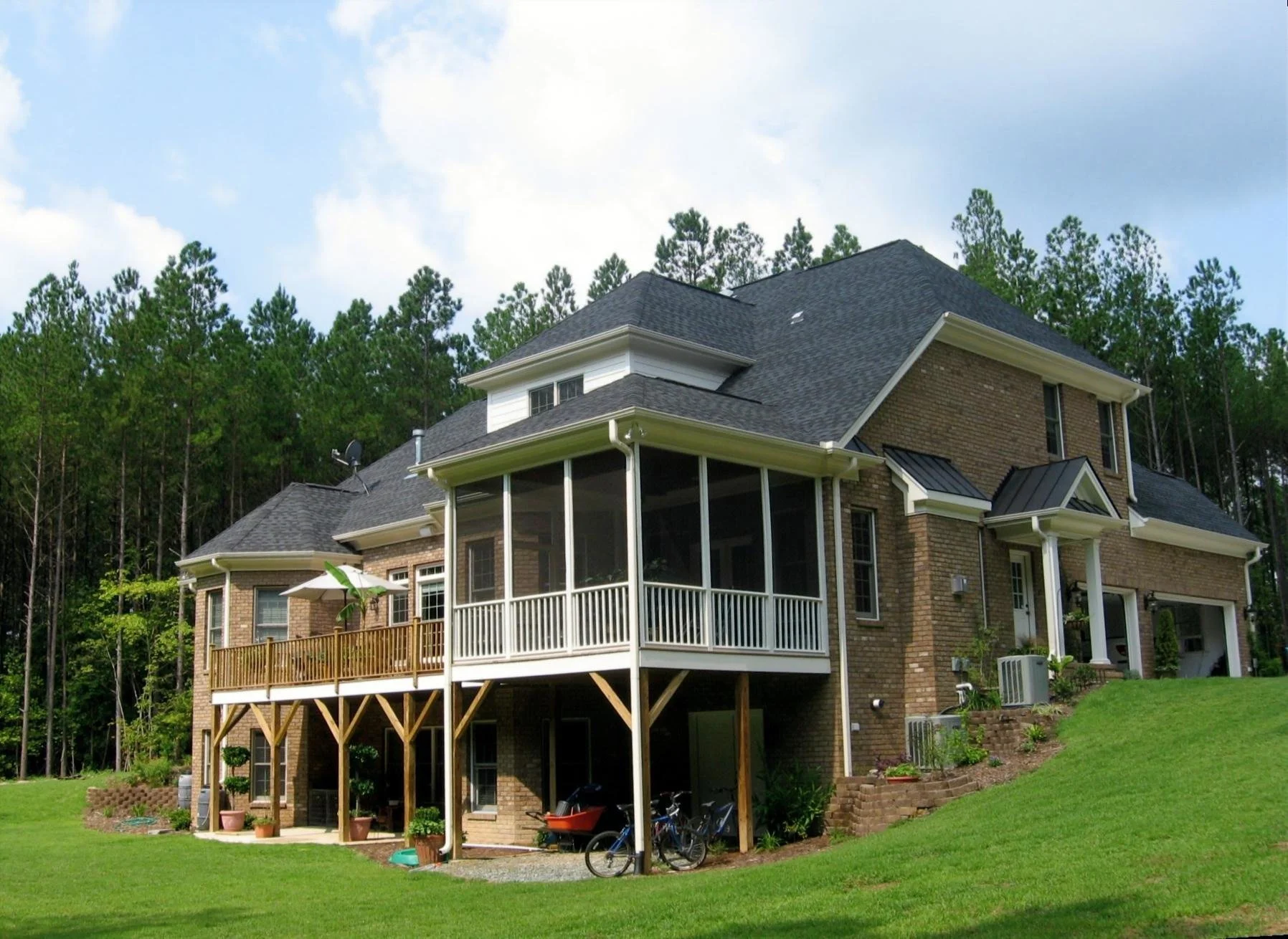
This back deck was built for a family who loves fresh air—there is room to grill, space to lounge in the screened porch, and a ground-level patio that spills straight into the back yard.
From there, build two lists: must-haves and nice-to-haves. That sounds simple, but it’s how you make decisions under budget pressure without losing what matters most.
Because there will be trade-offs. Nearly every custom project has a moment where priorities need to be clarified: do you want more square footage or higher-level finishes? Would you rather have the covered outdoor living space or the fully upgraded basement? Bigger pantry or larger mudroom?
A solid builder and designer should be able to explain how each decision affects cost and timeline so you can make choices with confidence instead of guessing.
7. The Emotional Side: Decision Fatigue and Communication
Custom home builds involve a large number of decisions, and it’s not just visible finishes. It includes mechanical planning, lighting layouts, outlet placement, trim details, tile patterns, and countless coordination items that don’t show up in a single “design day.”
Decision fatigue is common because the project lasts a long time, and the gratification comes late. You can be spending heavily for months before the home looks finished, and that can be mentally taxing even when the project is going well.
A few practical strategies reduce stress and protect the schedule:
Create a baseline “standard” for most rooms and customize selectively.
Group decisions by category (tile, plumbing fixtures, lighting, paint) rather than making one-off choices constantly.
Keep the decision-making group small and clear.
Establish a predictable communication rhythm with your builder—weekly or biweekly—focused on schedule, open items, and upcoming deadlines.
The goal isn’t to make the process feel “fun” every week. The goal is to make it organized, predictable, and free of avoidable surprises.
Frequently Asked Questions About Custom Homes
Is a custom home more expensive than buying an existing home?
Often, yes—especially compared to older resale homes. But the better comparison is value: layout fit, long-term performance, maintenance expectations, and whether you’re buying compromises you’ll want to change later.
How early should I involve a builder?
Early—ideally before you buy land and before plans are finalized. Builder input at the beginning prevents expensive corrections later.
Do I need to own land before I talk to a builder or architect?
No. In many cases, it’s better not to. A builder can help you evaluate buildability and avoid land that will force costly workarounds.
How much design control do I have?
In a true custom build, you’ll have significant control. The key is aligning design choices with budget and making decisions early enough to support scheduling and procurement.
What happens if we go over budget mid-build?
A good process catches budget pressure early through allowance tracking and selection management. If costs start climbing, the best time to adjust is before items are ordered and installed—when substitutions and scope changes are still practical.
Final Thoughts: Is Building a Custom Home Right for You?
Building a custom home is a commitment. It rewards people who want control, care about long-term quality, and are willing to engage in the process.
If you’re deciding whether it’s the right path, start with three honest inputs: your total budget, your timeline requirements, and your non-negotiables. Then have a straightforward conversation with a builder or architect about what’s realistic for your lot, your market, and your priorities.
That conversation—early—usually saves more time and money than any single design choice later.