
Four Common Cost Drivers When Building a Custom Home
A custom home’s price tag is shaped by much more than just its square footage. Oftentimes, the "under-the-hood" decisions—the ones involving labor, material grades, and structural complexity—are decisions that quietly increase costs on a home.
This guide is designed to pull back the curtain on four factors that influence the final costs on a home. By understanding how these choices impact your budget, you can design a home that captures your vision without any unexpected surprises along the way.
1. Land and Sitework
Most people think the budget starts when the framing goes up. It doesn’t. The budget starts the moment your builder has to turn your land into something a house can actually sit on.
That’s why you can take the exact same floor plan and build it on two different lots—and suddenly one project is much more expensive than the other, even though the house didn’t change at all. The lot did.
Here’s the part no one tells you when you’re falling in love with a piece of land: you’re not just buying the view. You’re buying everything it takes to make that land buildable.
What your builder has to do before “building the house” even starts
First, the builder has to clear the site.
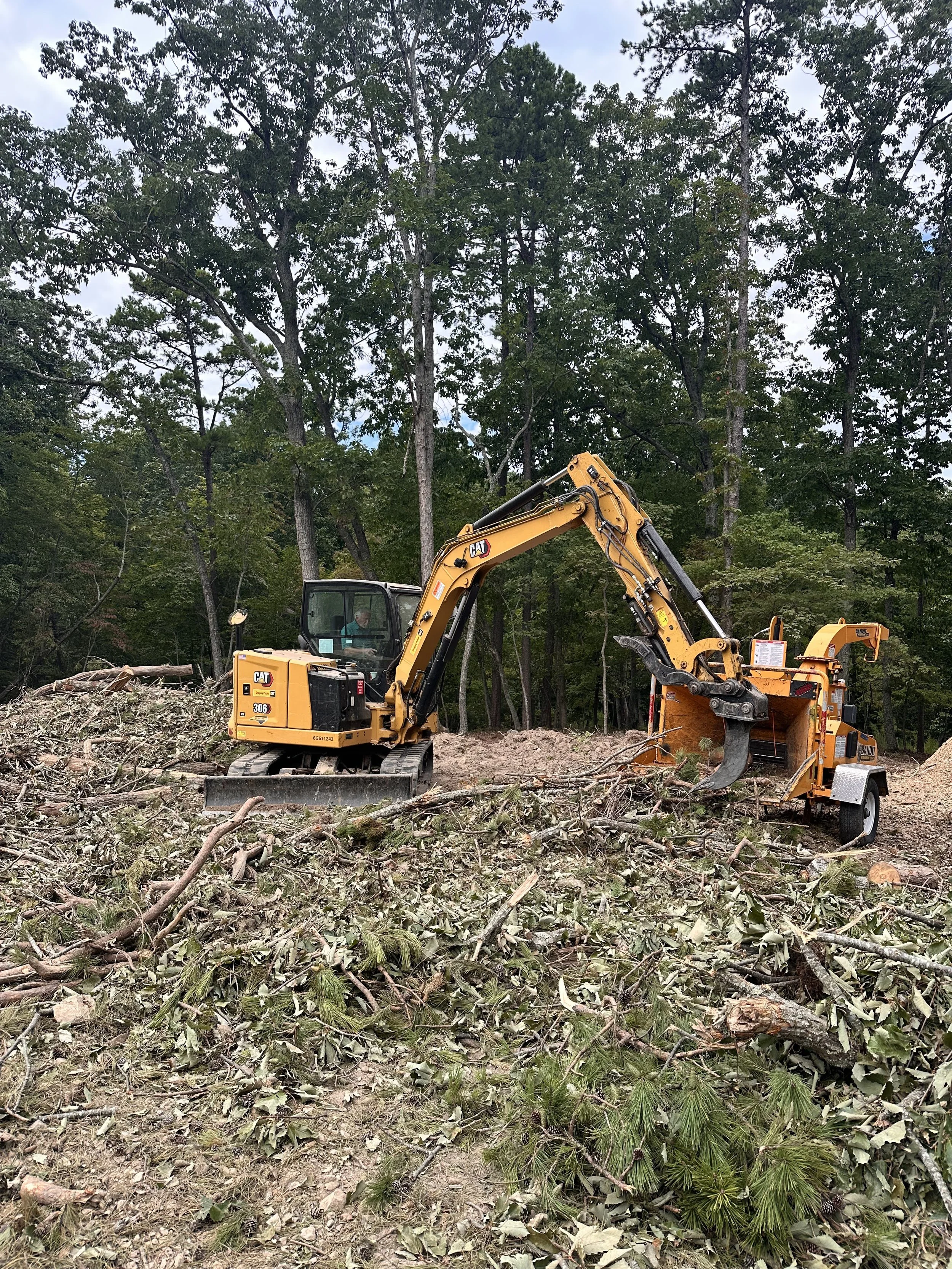
If your land is covered by grass, that’s straightforward. But if it is covered with trees, the costs can climb fast. It’s not just cutting trees. The builder also has to bring in heavy machinery to pull stumps, grind roots, and load debris. Then, a dump truck needs to haul the debris away. A wooded lot can take days, not hours—and disposal alone can be a meaningful cost.
Then they have to create a flat, stable place for the foundation.
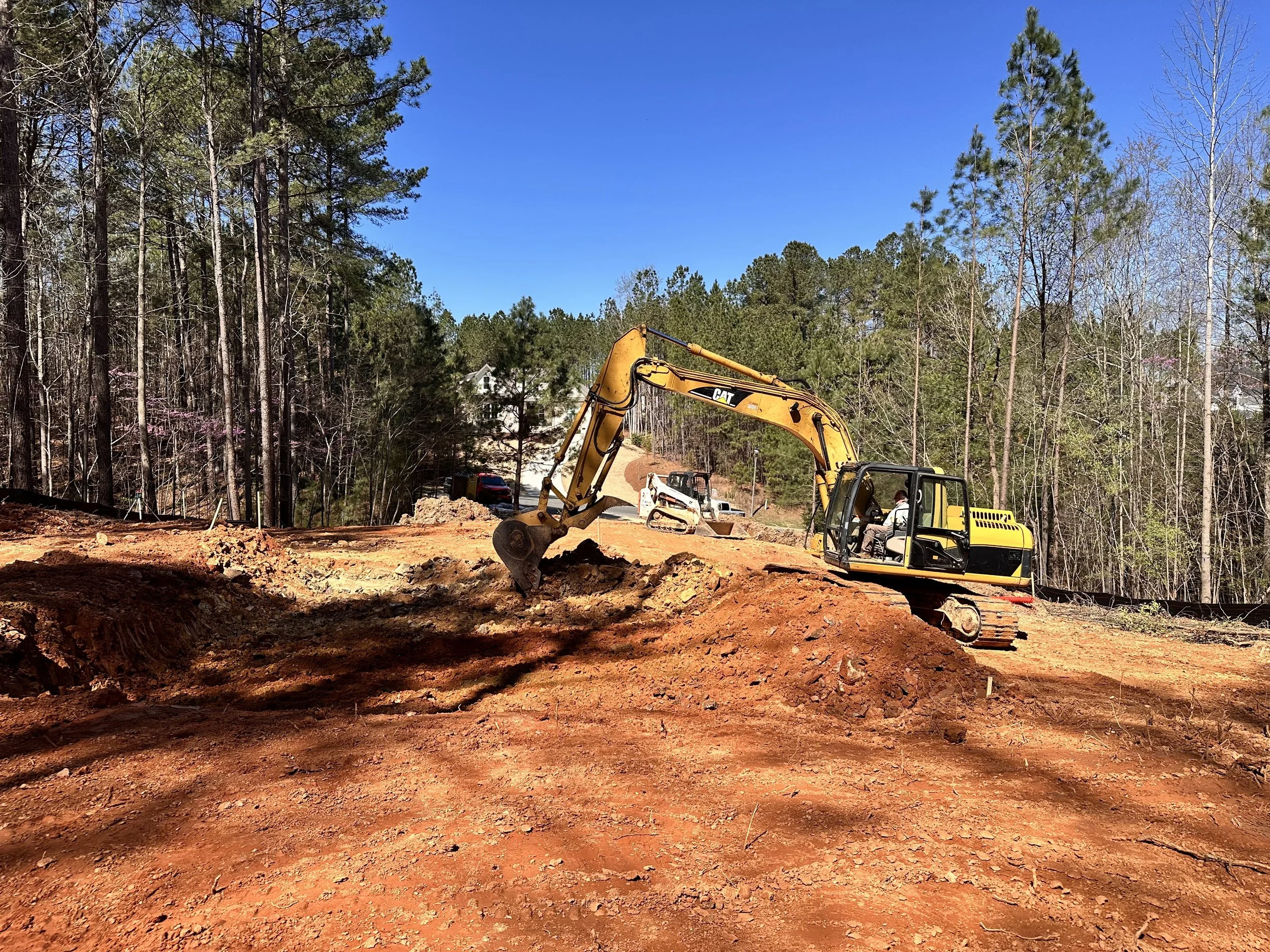
A house can’t sit on a slope. The builder needs a level base that won’t shift later. On an easy lot, they can move dirt from the high side to the low side to make it completely even. On a tricky lot, they either:
run out of usable soil and have to buy dirt and truck it in, or
end up with too much dirt and have to haul it off
Either way, you’re paying for trucks, equipment, and time. That’s why sitework can feel like a major investment.
Then the builders have to make rainwater go where it’s supposed to go.
Water is one of the biggest threats to a home. If your lot naturally slopes toward the house, or if water has nowhere to go, the builder has to fix that with grading and drainage systems. That can mean shaping the land, adding underground drains, tying gutters into piping, installing catch basins—whatever it takes so you don’t end up with water against the foundation or a backyard that turns into a swamp every time it rains.
And none of that is “extra” in a nice-to-have way. It’s required to build correctly and pass inspection.
This is why two builder quotes can look confusing. One builder might assume the lot is “average” and price the job that way. Another builder might assume the lot will need more grading, more drainage, and maybe a retaining wall—and their number comes in higher.
Neither approach is wrong. They’re just making different assumptions about unknowns.
How to protect your budget
If you want fewer surprises, you need more information before you commit to a budget.
Get a topographical survey: This shows how the land actually slopes, on paper, not by a gut feeling.
Plan for contingency: even on a “normal” lot, there can be surprises when you start digging such as rock or foreign debris. Build in some wiggle room into your budget to avoid surprises.
2. Windows
Most people budget for windows the way they budget for furniture: “We’ll pick the ones we like and upgrade if we need to.” That works for a couch. It doesn’t work for a wall of glass.
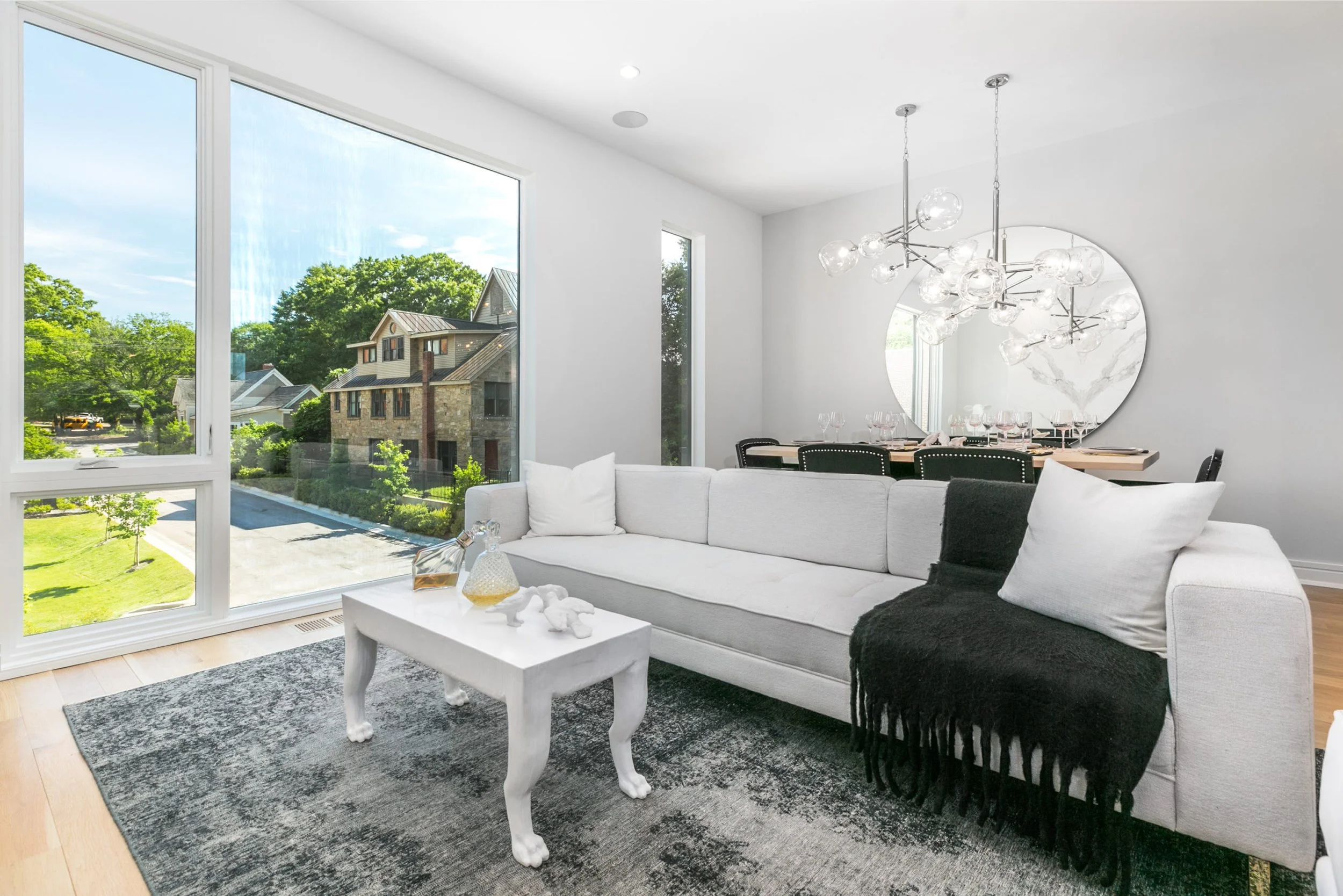
Because in a house, windows and doors aren’t just decoration. They’re part of the shell of the home—the thing that keeps the structure standing and keeps you comfortable inside. When you make the glass bigger, you’re not just buying a bigger window. You’re changing how the whole house has to be built and how it has to perform.
The reality: a big window is a big interruption
A normal exterior wall does two important jobs:
It holds weight.
Studs in the wall help carry loads from the roof and/or second floor down to the foundation.It insulates and seals.
A wall is packed with insulation and has fewer seams than a big window/door opening.
When you replace that wall with many windows, you remove a lot of what makes the house both strong and comfortable.
To do this, certain upgrades have to be made, such as:
stronger frames
better seals
better hardware
higher-performance glass (to reduce heat gain/loss and condensation)
That’s why the cost jumps.
How to get the windows you want without making them a budget problem
To get the big-window look without blowing the budget, pick one “feature wall” (instead of oversized glass everywhere) and keep the rest of the house to standard window sizes.
Another option is to use more fixed glass (windows that don’t open) whenever you can—fixed panels are usually less expensive, easier to install, and often seal better than large operable units.
3. Open Concept Homes
The open concept design sounds simple: take out a wall and suddenly the kitchen, dining, and living room feel huge. But that wall wasn’t there only to separate rooms — it was helping hold the house up.
A load-bearing wall is like a row of legs holding up a heavy table. If you remove the legs, the table doesn’t get lighter—you need a stronger support somewhere else so it doesn’t sag.
So when you “delete” a wall, your builder has to replace it with something that can safely carry that load across the open space.

Why open concept homes can increase costs
A bigger beam needs to be used as a support
To span a wide opening, the builder may need an engineered beam or, for larger spans/heavier loads, a steel beam. A bigger beam equals more engineering, more labor, and sometimes special handling.
Support posts you didn’t plan for
That beam has to sit on solid supports at each end. If there isn’t already a wall or post in the right spot, your design may need new posts—sometimes hidden in a bumped-out column, sometimes visible.
Foundation reinforcement
All that weight funnels down into a few specific spots. If the foundation under those spots isn’t designed for it, the builder may need thicker footings, extra concrete/rebar, or other reinforcement so the house doesn’t settle or crack.
How to compromise and still get the open feel
You can usually keep the vibe of an open concept without paying the full “steel tax.” Here are two compromises that work:
Keep a partial wall or a wider cased opening.
A partial opening still feels open, but it can often be supported more easily than removing the entire wall.Add one intentional post (and make it look planned).
A single post can shrink the span enough to avoid steel or reduce beam size. Wrapped in trim, it can appear like an architectural feature rather than a support pillar.
4. Tall Ceilings
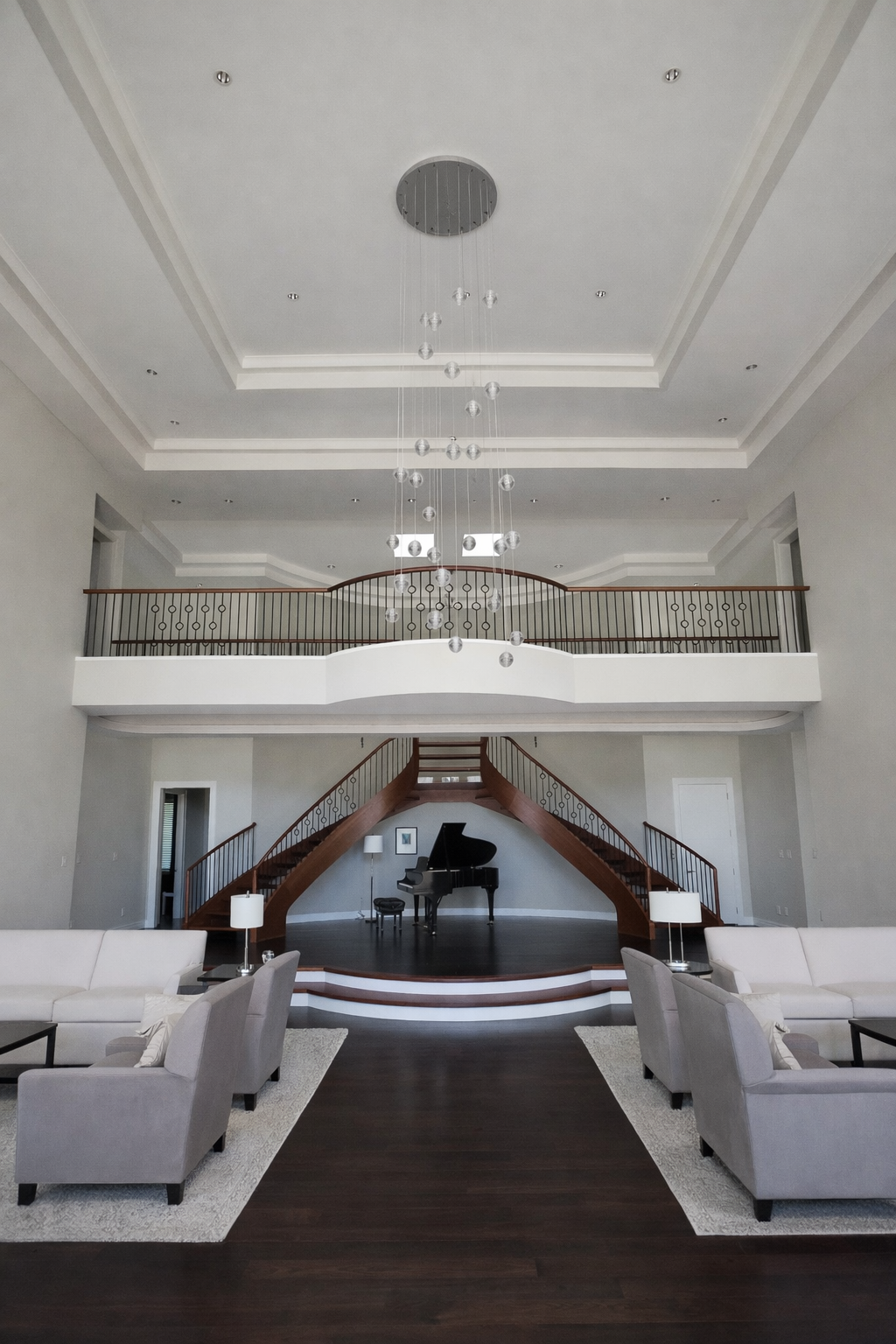
Elevated ceilings make a space look and feel great. But with a tall ceiling, you’re not just changing the height — you’re making the entire room “taller to build” from the framing stage onward.
The floor stays the same size, but the walls get taller, the inside surfaces get larger, and everything takes more work to finish.
Why the cost balloons
More framing, drywall, paint, and trim
If you go from a 9-foot ceiling to a 12-foot ceiling, you’re adding 3 feet of height to every wall in that room.
That equates to more drywall to hang, tape/mud/sand, and paint. If you’re doing extra trim details, tall baseboards, wall paneling, built-ins, etc., those costs scale up too.
Also, taller ceilings often trigger other “tall” decisions:
taller doors (8' vs 6'8")
taller cabinets / stacked uppers
larger windows to match the proportions
Those aren’t guaranteed, but they’re common, and they compound the spend.
Tall ceilings require more labor
Working on a ladder tends to be slower:
In a standard 8–9 foot room, crews can do a lot of work standing on the floor or a small step stool. In a 10–12 foot room, they’re constantly going up and down ladders or moving scaffolding around the room. That slows everything down.
How to compromise and still get the high-ceiling feel
Use high ceilings only where they matter most
Do the 10–12 ft ceiling in the great room (or entry) and keep bedrooms/hallways at standard heights. You will still get the wow factor without multiplying costs throughout the entire house.
Get the “tall” look without raising walls
Think about adding a tray ceiling, or using taller doors/large windows in a room with standard ceilings. Those options can give you the same airy feel with less material and labor than making every wall taller.
Conclusion
This guide isn't meant to steer you away from the features you love—it’s meant to give you the map to navigate them.
The most successful custom home builds aren't defined by having an unlimited budget, but by making informed choices. When you understand that a "window wall" requires structural support or that a sloped lot needs careful sculpting, you shift from being a spectator to being a partner in the building process.
Building a custom home is one of the most rewarding journeys you’ll ever take. By pulling back the curtain on these hidden drivers now, you’re setting yourself up for a build that is as stress-free as it is beautiful.